Maritime history · Amarides Reef
MariannaThe shipwreck between Naxos and Paros.
The documented story of the cargo vessel once known as Niels Mærsk—from her launch in 1961 to the collision, sinking and remains that now rest beneath the Aegean.
Piraeus registry · 6097
History · Research · Underwater recordAmarides Reef · Paros–Naxos channel
The documented story
From cargo ship to underwater archive.
For twenty years she crossed distant trade routes. In the early hours of 24 July 1981, one collision changed her course forever.
The vessel was built by Bijkers Aannemingsbedrijf N.V. in Gorinchem, Netherlands, and delivered to A.P. Moller-Maersk on 15 July 1961. Originally named Niels Mærsk, the 91.44-metre cargo ship served routes linking India, Sri Lanka, the Persian Gulf and the Far East.
After her sale to the Greek-owned Angkor Cia. Naviera S.A. in 1976, she became Atlas River. Her final name, Marianna, followed in 1980 under Piraeus registry number 6097.
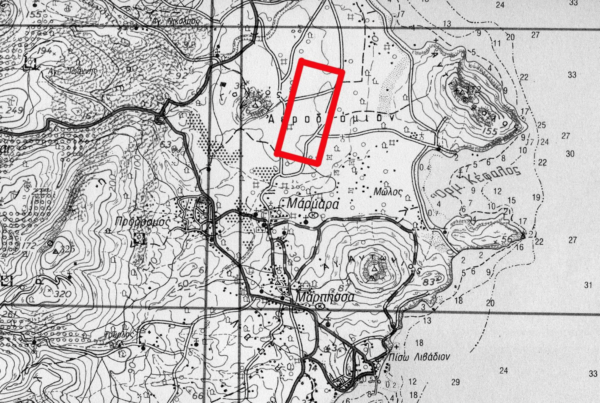
In July 1981, Marianna departed Piraeus carrying mineral ore, barley, steel sheets, irrigation pipes, pesticides and marble-related cargo for ports in the Persian Gulf and Red Sea. At 04:26 on 24 July, she struck the reef south of the Amarides islets in the Paros-Naxos channel and grounded in the shallows.
The passenger vessel Panagia Myrtidiotissa left Naxos and rescued all 24 members of the crew, bringing them safely ashore at Agia Anna. Two days later, an inspection confirmed that Marianna was sinking from amidships toward the stern while her bow remained raised above the water.
Salvage and clearance operations began in 1982. Sections above the surface were blasted and removed because they obscured the nearby lighthouse and created a danger to navigation. Steel, mineral cargo and other parts were recovered, but the work ended in 1984 with much of the ship still below.
Today, the principal surviving section extends for approximately 37 metres south of the reef. It rests upright on a nearly level sandy seabed at around 25 metres, with a slight list to starboard. The propeller is gone, while portions of the bow, cranes and cargo remain scattered around the site.
Time transformed the remains of an industrial accident into a new centre of marine life.Research by Manolis Bardanis