Maritime history · Kedros Bay · Donoussa
OrionThe lighthouse tender lost to war.
The researched history of the former Heerenveen: a lighthouse-service vessel, wartime transport and survivor of repeated attacks, finally destroyed off Donoussa in September 1944.
Research · December 2014
Royal Hellenic Navy · Kriegsmarine · RAFKedros · Donoussa · Cyclades
A vessel through four identities
From lighthouse dutyto the final attack.
Before its remains settled beneath the shallow waters of Kedros Bay, ORION had crossed borders, changed names and served three very different navies.
Built for another life
The ship began its life in the Netherlands. Launched in January 1920 as HEERENVEEN, it was a compact cargo vessel measuring 55.1 metres in length. In 1922 it passed to the French company Nantaise de Navigation à Vapeur and sailed under a new name: BOURGNEUF.
Its connection with Greece began in 1934, when it was purchased by the Samian Steamship company and renamed KARLOVASSI. Two years later it entered the Royal Hellenic Navy and assumed the name by which history remembers it: ORION.
A ship serving the lights
ORION was converted into a lighthouse tender. Its mission was practical but essential: carrying fuel, medicine, maintenance materials and inspection crews to the isolated lighthouses that protected navigation throughout the Greek seas.
On 12 July 1940, while supplying the lighthouse at Gramvousa in western Crete, ORION became the target of an unsuccessful Italian air attack. The incident came months before Greece formally entered the war and revealed how quickly an unarmed service vessel could be drawn into the approaching conflict.
Captured, raised and returned to service
Before the German occupation of Athens and Piraeus in April 1941, ORION was deliberately submerged in shallow water at Vouliagmeni to protect it from destruction. German forces later raised and repaired the vessel, treating it as captured property and returning it to service under the Kriegsmarine as a transport ship.
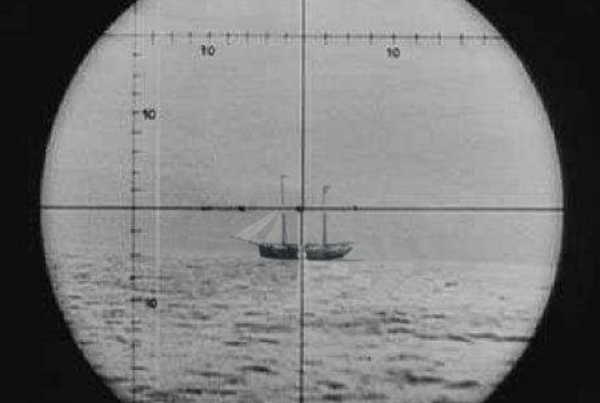
It survived sabotage in Piraeus in August 1943 and another sinking, followed once more by salvage and repair. In August 1944, at Karlovasi, torpedoes fired by the Greek submarine Pipinos failed to destroy it. ORION’s final encounter was still ahead.
The last day at Kedros
On 23 September 1944, an Australian reconnaissance aircraft located ORION south of Donoussa. Allied Beaufighters from RAF Squadrons 252 and 603 were dispatched from Libya, reaching the vessel at Kedros Bay during the afternoon.
The first formation attacked with cannon fire and rockets under heavy defensive fire. A second formation arrived at 18:48 and found ORION burning and grounded near the beach. Repeated attacks left the vessel completely destroyed. Its damaged hull remained there until the early 1950s, when much of it was dismantled for scrap.
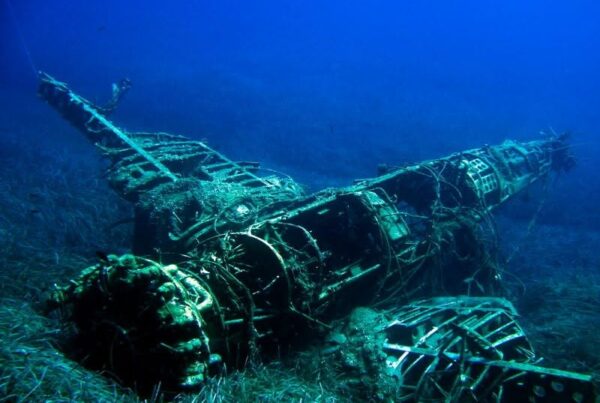
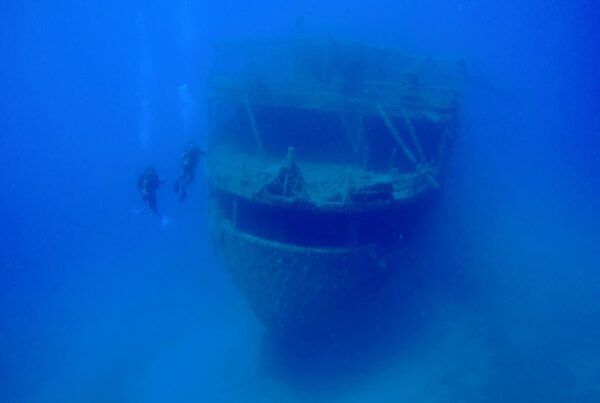
Fragments of the lower hull still survive beneath Kedros Bay at a depth of approximately five to six metres. Shifting sand sometimes conceals them and sometimes reveals them again—a quiet material record of the wartime events once played out above.